
Over the last ten years, the enterprise technology world has changed dramatically. Gone are the times of fixed infrastructure models that can’t adapt to the ever-changing market requirements; businesses are now moving towards agile, scalable and automated ecosystems that can adjust to market requirements. Docker is one of the technologies that has played a pivotal role in this transformation. Docker has become one of the most game-changing technologies that has affected enterprise architecture.
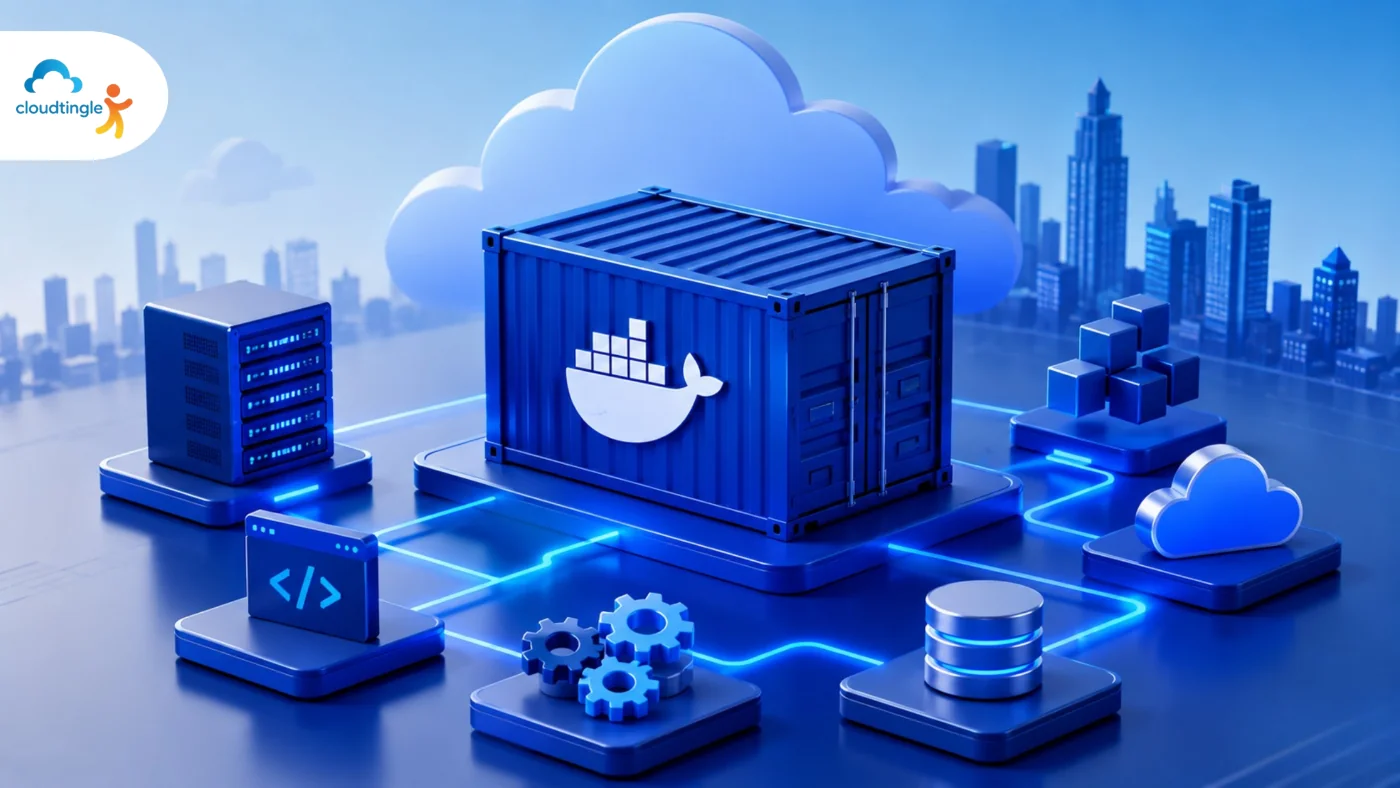
Docker’s containerization tech is a cutting-edge application deployment method. Docker’s light weight, mobile containers package applications and their resources together without requiring a dedicated operating system. This innovation has revolutionized the way that organizations design, deploy and manage software in the modern cloud hosting environments.
Docker not only serves as a means to enhance performance but has become the harbinger of digital acceleration, enabling the development of infrastructure solutions that encourage rapid innovations and scalability.
Understanding The Basics Of Docker And Containers.
Deployments of applications become easy by standardizing them within Docker Containers.
All of these containers contain all the information that makes an application work:
- Source code
- Runtime libraries
- System tools
- Dependencies
- Configuration files
This uniformity removes the common “works on my machine” problem that previously hampered development processes.
Containers share a common operating system kernel with the host operating system, which substantially lowers resource usage, accelerates startup times and increases deployment flexibility.
Consequently, applications are very portable, no matter what the infrastructure is.
Moving Beyond Monolithic Infrastructure.
In the past, enterprise applications were created as monolithic systems with various components within a single big architecture. This is a structure which frequently led to:
- Slow deployment cycles
- Limited scalability
- Complex maintenance
- Increased downtime risks
- Reduced development agility
Docker helped to propel the microservices revolution. Instead of a single application, businesses now divide applications into services that can be deployed.
The modular design also allows businesses to add new services to current services without impacting the entire application and improve fault containment and infrastructure resilience.
Faster Deployment And Continuous Delivery.
In a very competitive market, getting to market may be the biggest factor to the success of the business. Late software edition can hinder innovation and slow response to market.
Using Docker for deployment is often very effective.
Containers can be created and used across all development, testing and production environments, which helps to create a consistent environment throughout the Continuous Integration/Continuous Deployment (CI/CD) process and allows for better and more consistent delivery.
These benefits are available to development teams:
- Faster deployments
- Efficient rollback processes
- Automated testing
- Reduced deployment failures
- Faster software application releases
These benefits make a difference to modern businesses.
Docker And Enterprise Scalability
Scalability remains an important requirement for Cloud Hosting today, with workloads constantly changing due to surge in traffic, seasonality and other operational reasons.
Docker Supports Dynamic Scaling Models.
Containers can be spun up or down in seconds which means that businesses can start to leverage resources effectively throughout peaks and troughs in demand. This flexibility helps minimise unwarranted infrastructure expenses and improve performance stability.
For businesses managing:
- eCommerce platforms
- Streaming services
- SaaS applications
- AI workloads
- Financial systems
- Container scalability offers a high level of operational flexibility.
- Reduce resources used to achieve cost optimization.
Most virtual machines are traditional machines that will use up many of the resources, as they will need an operating system for each of them.
Docker Containers Eliminate This Inefficiency.
Organizations can fit more workloads on the same infrastructure by sharing the host kernel. This improved utilization results in:
- Lower infrastructure costs
- Reduced hardware requirements
- Better server density
- Enhanced energy efficiency
These efficiencies can add up to substantial long-term savings for enterprises that host applications on the Cloud, in large quantities.
Enhanced Application Portability
One of Docker’s greatest advantages is application portability. Often, modern enterprises are deployed to run in hybrid and multi-cloud environments that involve using public clouds, private cloud infrastructure, and on-premises environments.
Moving applications across different environments has previously created problems with compatibility and/or shutdowns of the application.
Docker’s Value Lies Where It Solves This Issue.
Consistency of containerised applications across deployments. Docker containers are consistent when running on AWS, Azure, Google Cloud or private servers.
This portability provides:
- Vendor flexibility
- Simplified migrations
- Better disaster recovery
- Reduced infrastructure lock-in
Docker’s portability keeps growing in significance as multi-cloud strategies continue to grow.
Strengthening DevOps Culture
Docker has also revolutionized the DevOps culture in enterprises.
In the past, there had been a disconnect between development and operations, which even led to conflicts during deployment.
The Solution To Overcome These Divides Is Containerization.
Docker standardizes environments to help developers, administrators and security teams work together. Shared deployment consistency reduces the friction in software life cycle.
This alignment encourages:
- Faster collaboration
- Improved productivity
- Greater infrastructure transparency
- Enhanced operational reliability
Docker is frequently a critical technology for today’s DevOps environment.
Identify Areas With Security And Isolation Benefits.
Security is still a critical issue with enterprise infrastructure management. The process-level isolation offered by Docker containers can help minimise vulnerabilities and attack surfaces.
Modern container security frameworks typically feature:
- Image scanning
- Runtime monitoring
- Access controls
- Namespace isolation
- Security policy enforcement
Such security measures are increasingly being embedded into organizations’ cyber security programs to safeguard distributed cloud hosting environments.
Docker And Kubernetes
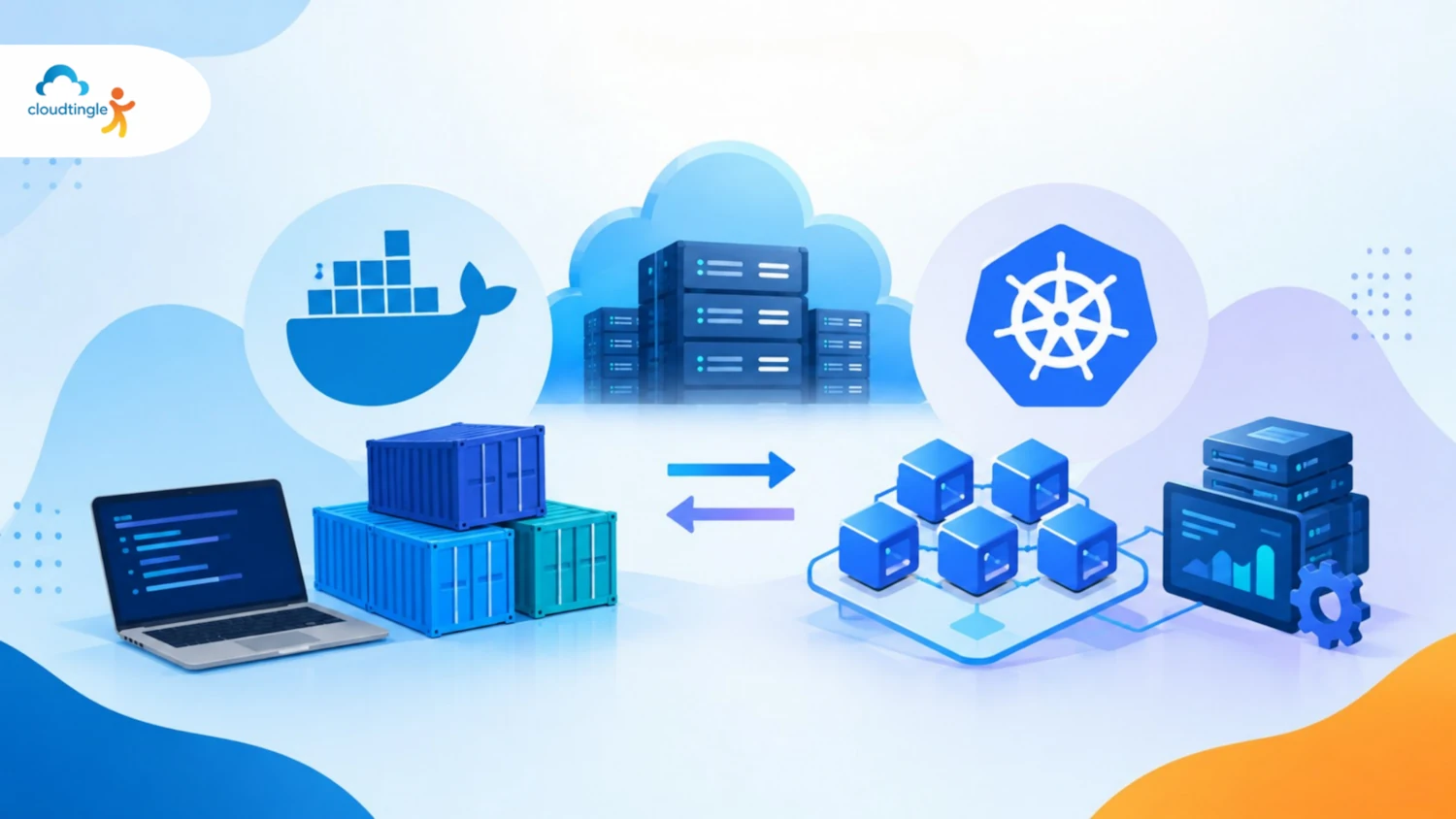
With the growth in the number of containers, enterprise organizations have found it necessary to utilize orchestration tools to manage the operations of a large number of containers at one time. This is how Kubernetes got its recent momentum going.
This combination of Docker and Kubernetes revolutionized the way that infrastructure is automated.
Kubernetes automates:
- Container deployment
- Load balancing
- Auto-scaling
- Service discovery
- Fault recovery
This orchestration feature enables businesses to effectively run thousands of containers on distributed systems.
Enterprise Cloud Infrastructure – The Future.
Docker has forever changed enterprise infrastructure strategy. The concept of containers is not a new one, but has become an essential part of the digital infrastructure today.
As businesses continue on the path of adopting AI, edge computing, and distributed applications, Docker’s role is set to become even more pertinent.
It’s not just about deployment mechanics. Docker has revolutionized the way organizations think about scalability, automation, portability and resilience in modern cloud hosting environments.
In a digital environment where businesses are continuously evolving, technology should be able to support innovative solutions, keep things efficient and reliable. One of the technologies that has become an important part of the construction of flexible, scalable and future-proof cloud infrastructures is Docker.