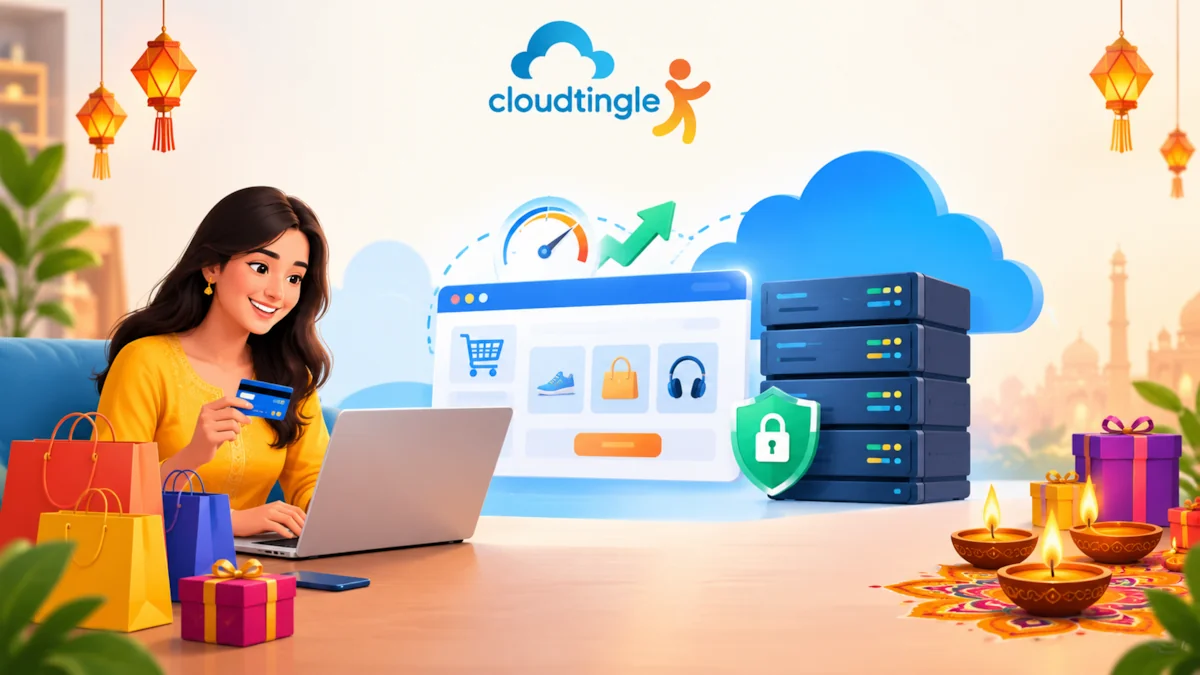
For Indian D2C brands, the festive season can change website traffic almost overnight. A store that normally gets a steady flow of visitors may suddenly receive thousands of shoppers after a Diwali offer goes live, an influencer posts a product, or an email campaign reaches customers at the same time.
That is why many growing brands start looking at cloud hosting India options before the festive rush. The goal is not simply to have a faster website. You need hosting that can handle traffic spikes, keep your checkout available and give your team enough flexibility to respond when demand suddenly increases.
A website that loads slowly during a major sale can cost more than a hosting upgrade. Customers may leave before products load, abandon their carts, or simply buy from a competitor. For a small business, that makes reliable hosting a practical part of festive-season planning.
Start With The Budget, Not Just The Features
Cloud hosting prices in India vary widely depending on CPU, RAM, storage, bandwidth, management and other resources. Basic cloud hosting can start at a few hundred rupees per month, while more powerful cloud servers for business workloads can range from roughly ₹1,000 to ₹5,000+ per month. Higher-resource or managed configurations can cost considerably more.
There is no reason for a small D2C brand to automatically choose the most expensive plan. Instead, look at your normal traffic, expected festive traffic, website technology and current resource usage.
It can also help to compare the cost of a hosting upgrade with the potential cost of downtime. If your store generates meaningful revenue during Diwali campaigns, paying a little more for suitable infrastructure may be easier to justify than risking a poorly prepared website.
Speed Matters More During A Sale
Customers are generally less patient when they are shopping online, particularly when they have arrived through a limited-time offer. A slow product page or checkout can quickly become frustrating.
Good hosting is only one part of website speed, but it provides the foundation. Adequate CPU and RAM, fast SSD or NVMe storage, efficient networking and sensible server configuration can help your website respond consistently.
For D2C businesses, cloud hosting India solutions can also be useful because cloud infrastructure can provide more flexibility than a basic shared hosting setup. Depending on the provider and architecture, resources can be adjusted as your workload changes.
Uptime is equally important. Before choosing a provider, check its uptime commitment and understand what its service-level agreement actually covers. No hosting setup can promise that every possible problem will never happen, but reliable infrastructure and monitoring can reduce avoidable interruptions.
Look At The Provider, Not Just The Server
During a busy sales period, you do not want to discover that your hosting provider is difficult to contact or has unclear service policies.
An established provider with experience serving Indian businesses can be worth considering. For example, Hostzop states that it has been providing hosting services since 2008 and offers cloud hosting and dedicated infrastructure for different business requirements.
That history is only one factor, of course. You should still compare the actual resources, support, pricing, backup policies and technical specifications of the plan you are considering.
It is also worth checking whether the provider has experience with common D2C workloads such as WordPress/WooCommerce, Magento, Laravel, databases and other e-commerce technologies. The right environment depends on what your store actually runs.
What If Your Website Goes Down During Diwali?
This is probably the question every D2C owner should ask before a major campaign.
Imagine launching a sale at 8 p.m., only to discover that your website is returning errors. You may not have an in-house server administrator who can immediately investigate the problem.
This is where technical support becomes important. Look for providers offering 24/7 assistance, especially if your store accepts orders around the clock. Also find out what the support team actually handles. Does support cover network problems and server availability? Can they help identify resource issues? Is managed administration available if you need it?
Having someone available when something goes wrong can provide peace of mind, but always check the provider’s exact support terms rather than assuming every technical task is included.
Choose Features Around Your Store
A festive-ready hosting setup does not need every possible feature. Focus on what your D2C business actually uses.
For an online store, useful considerations include sufficient CPU and RAM, SSD or NVMe storage, reliable bandwidth, database performance, SSL support, backups and server monitoring. A CDN can also help deliver static content efficiently to customers in different parts of India.
If you are running WooCommerce, Magento or another e-commerce platform, database performance deserves particular attention because product searches, customer accounts, carts and orders all depend on database activity.
Caching can also make a significant difference, but it needs to be configured correctly. Dynamic pages such as carts and checkout pages should not be treated in exactly the same way as static product images or CSS files.
Security Should Be Part Of Your Festival Preparation
A busy website can become an attractive target for automated attacks. You do not want your festive campaign interrupted because of malware, unauthorised access or a preventable configuration problem.
Use HTTPS, strong administrator passwords and multi-factor authentication wherever available. Keep your CMS, plugins and server software updated, and remove plugins or accounts that you no longer need.
Backups are equally important. Before launching a major Diwali promotion, make sure you have recent backups of your website and database. More importantly, know how restoration works. A backup that cannot be restored when needed is not much help.
Some hosting providers offer automated backups, monitoring, firewall protection or DDoS protection. These can be useful layers of defence, but they should complement good security practices rather than replace them.
Can Your Hosting Handle A Bigger Customer Rush?
This is where Cloud Hosting India can be particularly relevant to growing D2C brands. Your traffic may be relatively modest for most of the year but increase significantly around Diwali, Christmas, Republic Day sales, Independence Day promotions or other campaigns.
Cloud infrastructure can provide a more flexible approach to resources than traditional entry-level hosting. Depending on the setup, you may be able to increase CPU, RAM, storage or other resources as your requirements grow.
However, do not assume that moving to the cloud automatically makes a website scalable. Your application, database, images, code and third-party services also need to handle increased demand. It is worth testing your website before the sale rather than discovering its limits when real customers arrive.
A simple load test, performance check and backup restoration test can reveal problems while you still have time to fix them.
Plan Before The Festive Rush
For an Indian D2C brand, choosing cloud hosting India is less about finding the most impressive specification and more about preparing for the traffic you realistically expect.
Review your current resource usage, estimate your festive traffic, check your provider’s support and uptime terms, verify backups and make sure your website is optimised before launching the campaign. If your expected traffic is significantly higher than normal, discuss scaling options with your hosting provider in advance.
You do not need to overcomplicate the decision. The right hosting setup should quietly support your business while you focus on products, customers and your Diwali campaign.
If your store is preparing for its next major sale, compare a few suitable hosting options now and choose one that gives you enough performance, support and room to grow without paying for resources you do not need.