
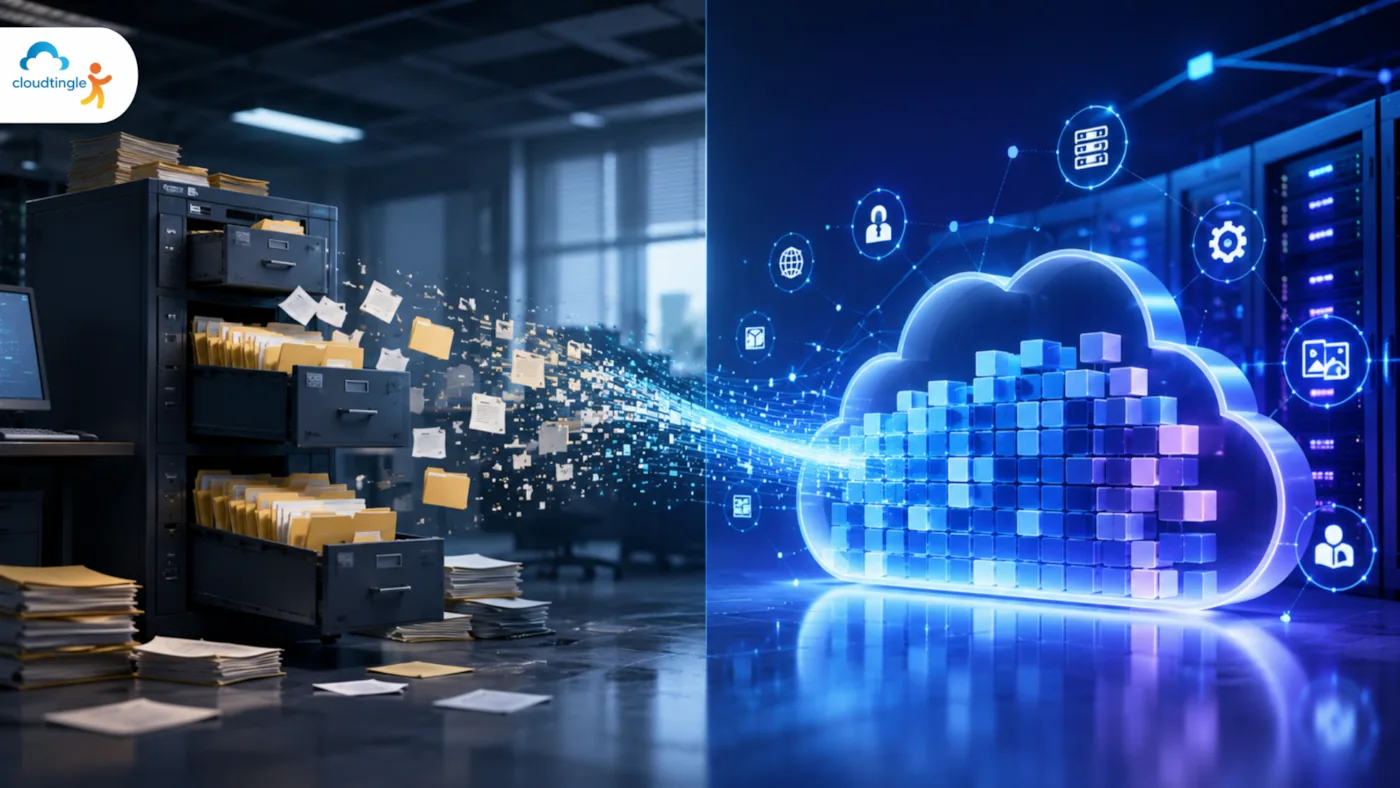
There has been a great deal of change in the area of digital storage, management and retrieval within the last couple of years. It is common practice for organisations to use file servers as the means by which to control data, however, this is becoming less prevalent and organisations are moving on to new, more adaptable forms of storage.
One example is that of object storage. It’s a paradigm shift in the way organisations think about data, not just files stored within folders, but as a valuable digital asset that must be managed intelligently, accessible worldwide, and resiliently protected.
The Limitations Of Traditional File Servers
The traditional file servers use hierarchical storage structures. Files are arranged in folders, subfolders and directories making it easy for users to navigate. This works great when workloads are smaller, but can become problematic as businesses create massive amounts of data.
One of the greatest challenges is scalability. When a file server expands it may need more equipment, more maintenance and complicated planning of the infrastructure. With increasing storage needs, companies can end up with several servers, various systems, and complex backup processes.
Sometimes performance can be a worry too. In a traditional system, when hundreds or thousands users are trying to access files at the same time, there are bottlenecks. The design of the architecture was for a different digital world where data volumes were predictable, and workloads were comparatively small.
Security is also a problem. Large server environments can involve increasingly complex file permissions, access controls and backup strategies. A single configuration error can make for weaknesses that allow information to be exposed.
Understanding The Power Of Object Storage
Object Storage is another philosophy. It stores information as individual objects, rather than organising data in the traditional way of folders. The data is contained within each object, along with metadata about the data, and a unique identifier so it can be easily retrieved.
This design provides a very flexible storage environment. From customer data to video files, application backups to analytical datasets, object storage can manage large amounts of data without the physical constraints of a file system.
One of the most unique features of it is metadata. Object storage can add a lot of context to each object, unlike traditional storage models where only the name and location of files are stored. It makes a smarter and searchable data environment.
Scalability Without Complexity
Ease of scaling is one of the main motivations for businesses to migrate to object storage. Organisations don’t have to worry about buying more physical servers whenever they need to store more data.
Object storage systems are created for virtually limitless expansion. They can hold terabytes, petabytes or larger datasets with consistent performance. This is why they are especially important in fields like healthcare, financial data, media production, and AI where data collection happens on an ongoing basis.
One of the most important characteristics of the Cloud Hosting platform is the Object Storage feature because it is highly flexible and allows companies to get what they require from their storage solutions without the physical presence of any infrastructure. Companies can always increase the capacity of their storage according to their needs.
Improved Accessibility And Global Collaboration
The modern work force is dispersed. Employees, customers and applications may need to access information from a variety of locations and devices. The difficulty of accessing the files remotely, particularly in enterprises having multiple locations, is a challenge for traditional file servers.
Object storage helps with this challenge by providing easy integration via web and APIs. Access to data is secure and can be obtained from anywhere, making for global collaboration and digital workflows.
Cloud Hosting India providers are increasingly making use of these object storage technologies to meet the requirements of organizations that demand high availability, remote access, and reliable data management.
Enhanced Durability And Data Protection
Data loss is often catastrophic. Advances in redundancy mechanisms and automated protection strategies resolve this issue with object storage.
Many Object Storage solutions have multiple data centres, so that data is not lost forever when hardware fails. Versioning, replication, and lifecycle management are some of the extra resilient features.
This way, you use a digital barrier that protects your data, even if something happens. The architecture is conceived to be durable, not just for its practical purpose, but as a key design factor.
Cost Efficiency For Growing Businesses
Another reason for moving away from file servers to object storage is financial efficiency. For traditional infrastructure, hardware, maintenance, electricity, cooling, and technical management are all required investments.
Object storage has a more flexible consumption model. A company pays for its resources as it uses them, rather than buying extra capacity that it cannot use. This is particularly advantageous for startups and expanding businesses that require enterprise-level solutions without significant investment.
The use of a modern Cloud Server environment together with object storage can give businesses hugely flexible storage solutions, combined with flexible computing power. The combination helps to serve applications, databases, backups, and digital platforms, all while ensuring operational agility.
The Future Of Data Storage
Object storage is a component of a digital evolution, in which traditional file servers are replaced. Organisations today have an unprecedented amount of information being created, while traditional storage models are unable to keep up.
The framework of object storage, its future-oriented nature, is rooted in scalability, accessibility, intelligence, and resilience. It supports today’s technologies including AI, big data analytics, IoT platform and cloud-native apps.
The change is not about eliminating all file servers. Many enterprises will remain with “hybrid” solutions, which mix existing solutions with object storage solutions. The trend is definitely towards data management architectures that can be limitlessly expanded, and that can be connected across the globe.
Object storage is not only a file server replacement, but it’s also a fundamental component of the digital transformation that businesses are continuing in their evolution. It’s a new paradigm where data is simpler to manage, protect and use as a business asset.

One thought on “Why Object Storage Is Replacing Traditional File Servers.”