
By 2026, cloud infrastructure has become a necessity in the growing digital stratosphere. Businesses are no longer inquiring whether they should implement cloud systems or the level of intelligence with which they can do so. The VPC, the beautiful amalgamation of isolation, scalability and programmable networking is at the heart of this transformation.
A VPC network is not only a technical construction. It is a digital enclave, a sovereign slice of the cloud where businesses plan workloads in a surgical-precision manner. This architecture is now the silent force behind modern applications, fintech ecosystems, SaaS platforms, and data-driven enterprises in the rapidly digitizing economy of India.
The Essence Of A VPC Network
A Virtual Private Cloud (VPC) is a logically isolated network that is placed within a bigger public cloud setup. It acts like a personal data center but inherits the flexibility and worldwide accessibility of cloud computing.
Imagine a fortified digital estate. High walls define boundaries. Within, resources communicate through controlled pathways, governed by rules you define, not the provider. This is what VPC networking is all about.
In contrast to the classic hosting environments, VPCs can provide granular control over IP addressing, routing tables, subnet segmentation, and security policies. Such a degree of orchestration is what would make sure that workloads are insulated and yet enjoying the benefits of the cloud scaling.
In contemporary deployments in India, cloud hosting india providers are increasingly turning to VPC Frameworks to ensure the agility and compliance.
Architectural Anatomy Of VPC Systems
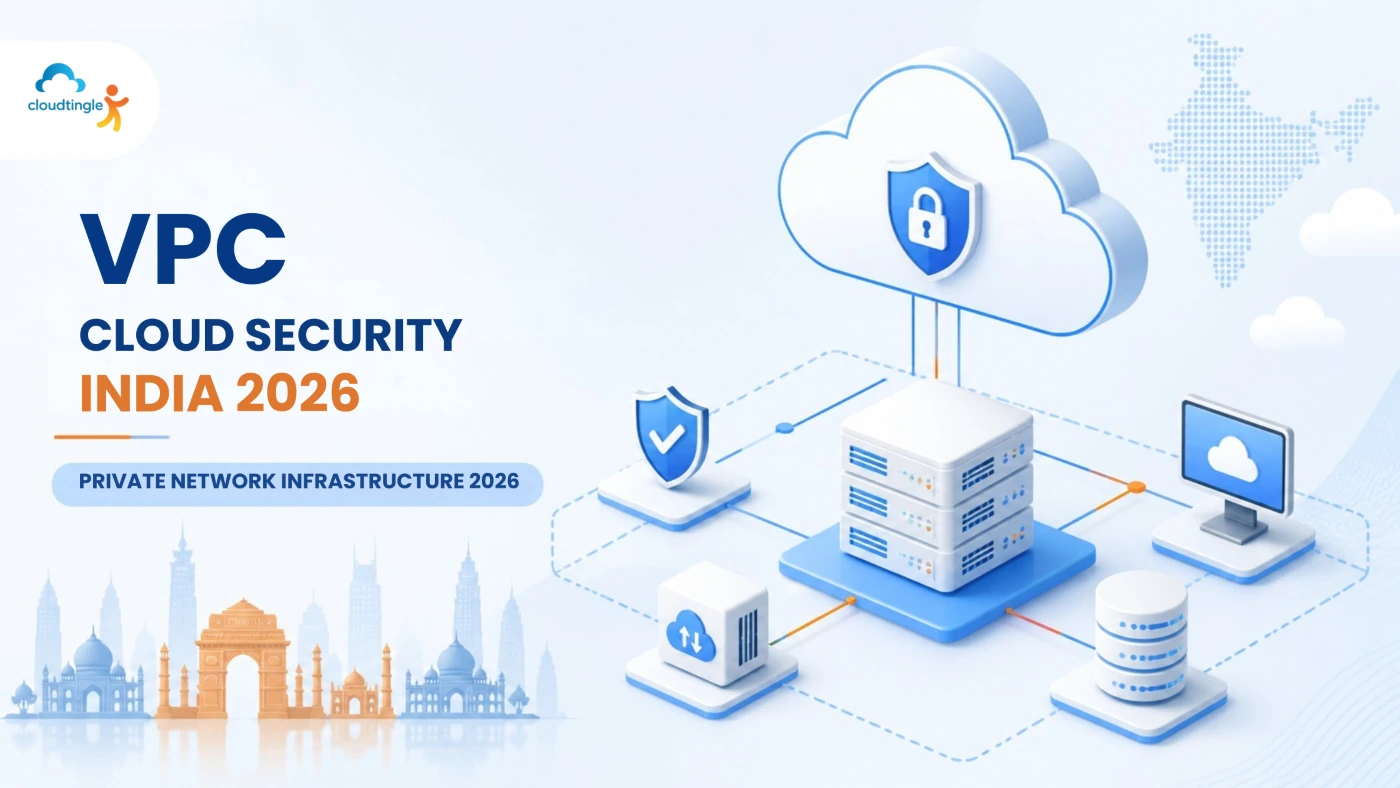
A VPC is composed of several interdependent components, each contributing to its structural integrity:
1. Subnet Fabrication
Subnets divide a VPC into logical segments. Public subnets handle external communication, while private subnets remain cloistered for backend operations such as databases and application logic.
2. Routing Intelligence
The route tables serve as the nerves of the VPC. They define the way that data packets are passed between subnets, between gateways and external networks. Correct configuration will provide the lowest latency and best traffic flow.
3. Gateway Interfaces
Internet gateways enable controlled exposure to external networks, while NAT gateways provide secure outbound access for private resources without exposing them directly.
4. Security Stratification
Security groups and network access control lists (ACLs) are multifaceted protection mechanisms. They control the ingress and egress traffic with accuracy, and ensure zero-trust enforcement of environments.
Layered architecture forms a robust digital fortress that can handle workloads of enterprise level.
Strategic Advantages Of VPC Adoption
The appeal of VPC networks extends far beyond technical elegance. It lies in the strategic advantages they confer upon modern enterprises.
Sovereign Isolation
VPCs are independent ecosystems. This isolation helps to reduce cross-tenant risk and increase the security of data, especially in the industries processes sensitive data.
Elastic Scalability
The resources may be dynamically expanded or contracted without disturbing the underlying network topology. This flexibility plays a vital role in dealing with unexpected workloads.
Granular Control
From IP schema design to firewall configuration, VPCs provide administrators with microscopic control over infrastructure behavior.
Performance Optimization
VPCs enhance responsiveness of applications and reliability of systems by reducing network congestion and enabling intelligent routing.
These natural strengths are becoming the primary consideration of organizations considering the optimal cloud hosting in India.
VPC In The Indian Cloud Ecosystem
The cloud environment in India is in the process of a radical transformation. As sectors like healthcare, e-commerce, fintech, and education become digitized rapidly and insecure and scalable infrastructure is demanded.
Cloud providers are retaliating with enhanced VPC services that incorporate automation, AI-based traffic analysis, and improved compliance models. Hostzop, among other regional cloud innovators is driving this change by providing powerful infrastructure that suits Indian businesses.
In this ecosystem, cloud hosting india has come to be synonymous with flexibility and enterprise resilience. VPC networks establish the core of this evolution, as they help businesses roll out the apps with certainty and accuracy.
Real-World Applications Of VPC Networks
VPC architecture is capable of changing smoothly across the industries because of its versatility:
VPCs are used at fintech platforms to provide protection to transaction pipelines and to ensure compliance with regulatory measures.
E-commerce systems are based on isolated systems in order to handle a large traffic volume during peak sales.
Healthcare networks store and process sensitive patient information in private subnets.
Multi-tenant architectures are deployed by SaaS providers without compromising data separation.
Both cases highlight the need to use controlled networking in a mission-critical environment.
Implementation Considerations
VPC implementation should be well architected. Improper configuration may result in inefficiencies or insecurity.
Key considerations include:
- Designing subnet architecture based on workload distribution
- Installing least-privilege security policies.
- Continuous monitoring of network traffic with anomalies.
- Coding transmitted data and data at rest.
- Creating redundancy between availability zones.
A properly implemented VPC can thus be a self-sustaining ecosystem that can support the operations of an enterprise.
The Future Of Private Cloud Networking
The cloud computing trajectory is towards more autonomous infrastructure. VPC networks will probably become self-optimizing networks driven by machine learning and predictive analytics.
The focus is no longer going to be on the basic infrastructure provisioning, but on intelligent network orchestration. Not only will VPCs host applications which they will actively monitor, but they will also actively monitor performance, security, and cost efficiency.
This development indicates a paradigm shift: fixed infrastructure to responsive digital ecosystems.
Conclusion
VPC networks is a significant milestone in the history of cloud computing. They fill the middle ground between publicly-scaled clouds and privately-scaled infrastructures, offering a balanced architecture that addresses modern digital needs.
In the rapidly developing technological environment in India, adoption of VPC is no longer a luxury but a necessity. With businesses undergoing digital transformation, cloud hosting india solutions are beginning to add VPC as a standard infrastructure.
Finally, companies who are in need of the best cloud hosting in India will find that the VPC networks are not merely a feature, but the heartbeat of the modern cloud era.