
Adoption of cloud technologies is happening at an accelerated rate due to the fact that organizations are transforming themselves digitally, fostering innovations and making their operations more efficient and sustainable. Cloud platforms are not being viewed as only storage and computational media by the companies anymore. They are rather developing smarter and scalable ecosystems that can cater to ever-changing demands of their business. Future Cloud Hosting Trends 2026 will define how applications will be deployed, how data will be secured and how infrastructures will be optimized.
The Growing Importance Of Cloud Hosting
In today’s world, business organizations of all sizes are slowly moving away from the conventional on-premise infrastructure and opting for modern “Cloud Hosting” solutions. The cloud offers greater flexibility and effective resource management while helping to scale services according to demand.
Hosting via the cloud distributes tasks among multiple servers and improves performance and reduces downtime as compared to traditional hosting. This helps firms to respond to changing market conditions without spending too much money on hardware.
In the face of increasing competition in the digital environment, businesses that take advantage of advanced cloud hosting technology will get an edge in improving customer satisfaction and ensuring continuity of operations.
AI-Powered Cloud Management
AI is one of the most disruptive innovations of cloud computing today. AI Cloud Hosting is revolutionizing the hosting landscape, making hosting environments smarter, more adaptive, and highly efficient.
AI can streamline many of the tasks involved in the operation, such as:
- Resource allocation
- Traffic prediction
- Performance optimization
- Threat detection
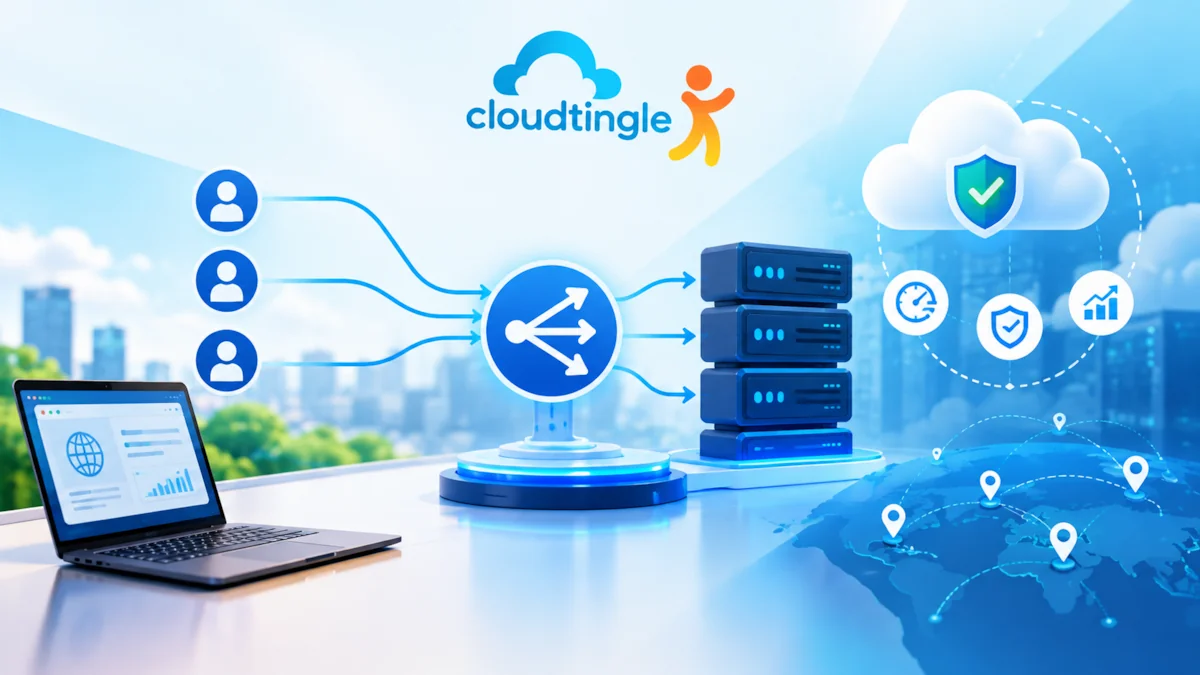
- Load balancing
- Infrastructure monitoring
Server performance is always monitored by the AI as it is optimized at the same time, thus, ruling out any chances of downtime without requiring any human intervention.
Innovations in technologies like this allow businesses to become more efficient and improve infrastructure performance.
Increased Adoption Of Managed Cloud Solutions
Many organizations may not have the necessary knowledge to run their cloud infrastructure. Thus, Managed Cloud Hosting is gaining traction among the companies that are looking for expert infrastructure management services.
Managed hosting providers usually take care of:
- Server maintenance
- Security updates
- Performance monitoring
- Backup management
- Disaster recovery
- Technical support
Businesses can concentrate on innovation and growth as opposed to infrastructure management.
Multi-cloud technology is a managed cloud infrastructure, which makes the process easier and works great for startups and scaling businesses.
Multi-Cloud Strategies Continue To Expand
Many organizations are gradually moving from using only one cloud infrastructure and are shifting towards multi-cloud infrastructure.
In other words, they are distributing their applications across various cloud infrastructures to reduce their dependency on just one cloud infrastructure.
Benefits include:
- Improved disaster recovery
- Reduced vendor dependency
- Enhanced availability
- Greater workload optimization
- Better regional performance
- Increased operational resilience
With multi-cloud, businesses have more control over the infrastructure, alongside business continuity improvements.
Security-First Cloud Infrastructure
Cybersecurity is still a big concern in business.
Modern Business Cloud Infrastructure is increasingly embedding in the cloud with sophisticated security technologies, rather than security being an add-on.
Key improvements in security are:
- Zero Trust architecture
- Multi-factor authentication
- Identity and access management
- AI-powered threat detection
- End-to-end encryption
- Continuous vulnerability monitoring
Security measures in the technology protect sensitive business data and ensure compliance with regulatory requirements.
Edge Computing Gains Momentum
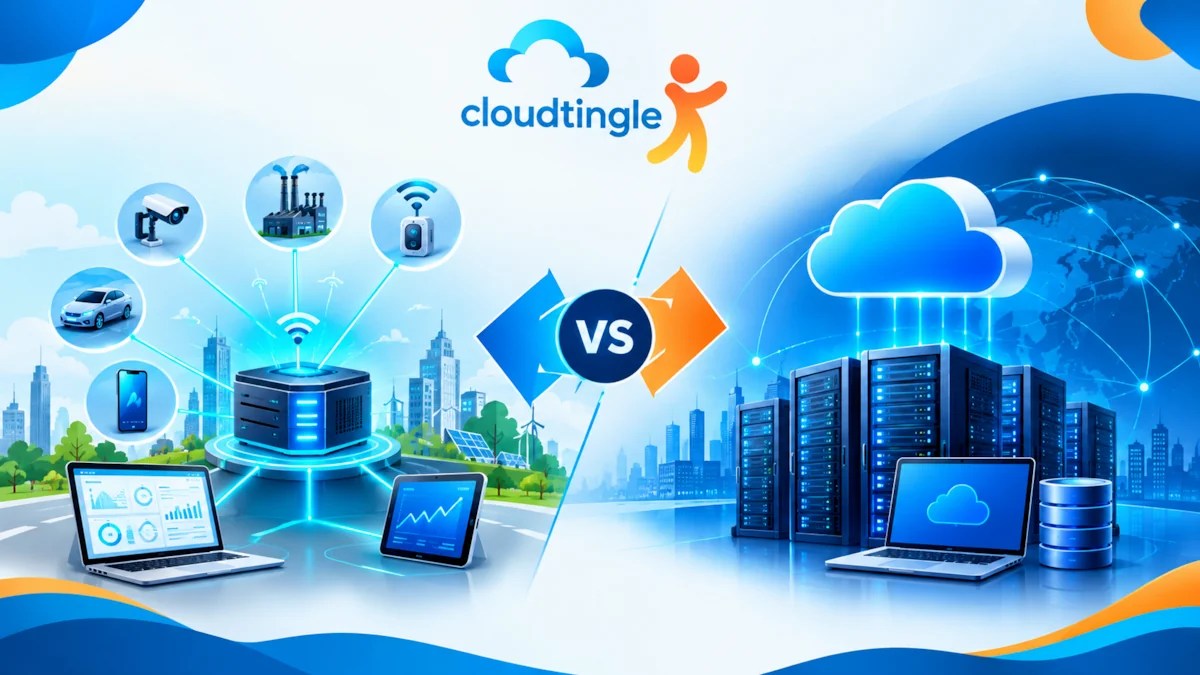
Another trend that is impacting cloud hosting is edge computing.
Edge computing brings computing resources closer to the end user as opposed to being processed in centralized data centers.
This reduces:
- Network latency
- Response times
- Bandwidth consumption
Many healthcare, manufacturing, financial services, smart city, and IoT applications are now taking advantage of the advantages of having local processing speed combined with centralized cloud management.
Edge infrastructure is expected to keep growing in 2026, and cloud service providers are expected to continue to expand edge infrastructure in 2026.
Sustainable Cloud Infrastructure
Businesses looking for hosting providers are increasingly taking into account the sustainability of the environment.
Cloud service providers are putting considerable effort into:
- Energy-efficient data centers
- Renewable energy sources
- Intelligent cooling technologies
- Carbon reduction initiatives
- Efficient server utilization
Cloud platforms are becoming more and more popular because they help to do their part in terms of environmental responsibility, yet still offer enterprise-class performance.
Green cloud is a big competitive advantage that these initiatives are expected to be in the hosting industry.
Modern Cloud Hosting Infrastructure<<
Serverless Computing Continues To Grow
Serverless computing takes a lot of the hassle out of infrastructure management.
Cloud platforms provision computing resources on-demand and developers can concentrate on application code.
Advantages include:
- Faster application deployment
- Lower operational overhead
- Automatic scalability
- Improved development efficiency
- Cost optimization
Serverless architecture is becoming a popular option for businesses building new web applications and services on the cloud.
Smarter Cloud Servers
Cloud Servers are becoming more and more intelligent with the ability to be automated, predictive and advanced orchestrated.
The cloud infrastructure of today enables:
- Automated scaling
- Self-healing systems
- Predictive maintenance
- Intelligent workload distribution
- Resource optimization
- Real-time performance analytics
These innovations decrease manpower engagement, boost infrastructure reliability and effectiveness.
This leads to quicker responses, better uptime and reduced administration costs for businesses.
Enhanced Disaster Recovery Planning
Business continuity is a key issue.
To enhance DR capabilities, cloud providers are building geographically distributed infrastructure, automated failover systems, and continuous data replication.
Applications and data can now be easily restored in the event of an unexpected interruption.
Better recovery planning results in reduced economic impact and customer confidence in the event of an unplanned occurrence.
Cost Optimization Through Intelligent Resource Allocation
Cloud spending is still reshaping from just pay-as-you-go pricing.
New monitoring platforms are now in place that recognize workload patterns and automatically suggest infrastructure changes that eliminate wasteful resource use.
Businesses can optimize:
- Compute utilization
- Storage allocation
- Network usage
- Virtual machine deployment
- Application performance
Intelligent cost optimization enables companies to optimize the ROI for their provided services without sacrificing quality of service.
Greater Automation Across Infrastructure
Automation is emerging as one of the hallmarks of today’s clouds.
Simple management like provisioning, monitoring, scaling, patching and scheduling backups are done automatically.
Automation improves:
- Operational efficiency
- Infrastructure consistency
- Service reliability
- Security compliance
- Deployment speed
With these technologies advancing, companies can focus more on innovation and customer-driven projects.
Conclusion
The Cloud Hosting Trends for 2026 go far beyond simply being about hosting, as they refer to the process by which businesses are making use of the cloud to foster their development. The Cloud Hosting Trends for 2026 go beyond merely being about hosting; rather, they encompass how companies will make use of the cloud to facilitate their development. As a result of the advent of artificial intelligence, automation, cybersecurity, edge computing, sustainable initiatives, serverless services, and Cloud Servers, businesses have started rethinking their approach to digital infrastructure creation and management.
Focusing on performance optimization, protection of important business data, scalability, and competition in the constantly evolving digital world, companies choose to invest in modern Cloud Hosting, opting for AI Cloud Hosting, applying Managed Cloud Hosting, and improving Business Cloud Infrastructure stand to gain a lot from doing so.