

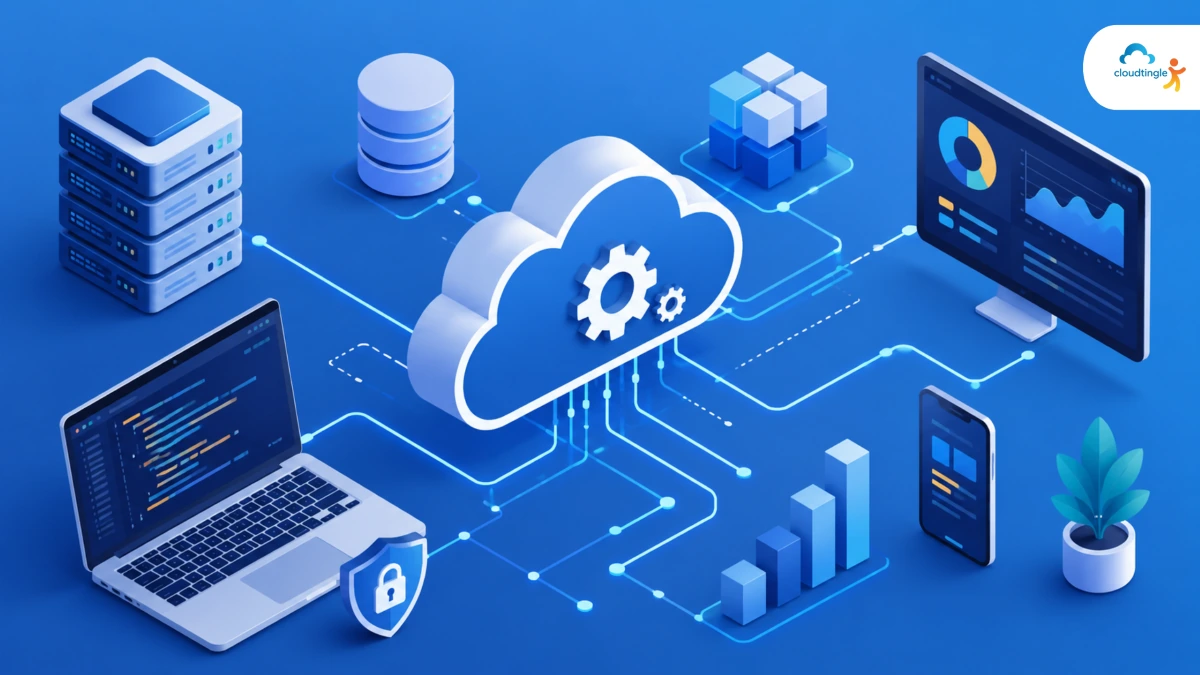
With a growing number of organizations moving to the cloud with the majority of their workload, manual management of complex IT environments has become inefficient and prone to errors. Today’s businesses require quick deployments, uniform infrastructure, and the ability to scale up resources as needed. This change has added API Access as one of the best parts of cloud computing.
In addition to relying solely on web-based dashboards, software developers and IT managers rely on APIs for automating routine activities, accessing external applications, and managing their resources accurately. There are many different functions which can be performed by an API: virtual server provisioning, storage management, monitoring performance metrics, and others thus making cloud providers incredibly flexible and efficient.
Understanding API Access
An Application Programming Interface (API) is a communication link between two sets of software. Applications, scripts and management tools can communicate with cloud services without human intervention with API Access.
Administrators can programmatically execute commands to accomplish tasks like:
- Creating virtual machines
- Managing storage volumes
- Configuring networking
- Monitoring cloud resources
- Automating backups
- Managing user permissions
This feature enables infrastructure administration to be streamlined and repeatable.
The Role of API Access in Cloud Automation
Automating the cloud relies on being able to get things done repeatedly and efficiently. The larger infrastructure becomes, the more difficult manual administration is.
Organizations can leverage API Access to automate almost all cloud operations, such as:
- Server provisioning
- Resource allocation
- Application deployment
- Security policy enforcement
- Infrastructure scaling
- System monitoring
The use of automation minimizes the number of repetitions and possible mistakes along with the complexity of operation of the process.
Faster Infrastructure Deployment
In today’s software development world, time is a critical issue.
In a traditional infrastructure, administrators might have to manually configure servers, storage, networking, security etc. settings. This can take hours or days!
With API Access, deployment scripts can automatically provision complete environments within minutes.
This enables organizations to:
- Create new applications quickly.
- Provide ongoing integration processes
- Accelerate product releases
- Improve development efficiency
Quick deployment enables companies to react to customer needs in a timely manner.
Consistent Infrastructure Configuration
One of the most common reasons for system failures is the configuration inconsistencies.
Small changes between servers can cause compatibility problems and security breaches, when infrastructure is set up manually.
Automation using API provides the same specification for every environment.
Benefits include:
- Standardized deployments
- Reduced configuration drift
- Improved reliability
- Easier troubleshooting
- Greater operational consistency
In a large cloud with hundreds or thousands of virtual resources it is particularly valuable when you can start by doing the same thing and then do it again.
Simplified Resource Scaling
The demands and desires of the business may change quickly.
There may be some sudden increases in traffic if they launch some promotion campaigns, seasonal needs, or even some viral content.
With API Access, cloud infrastructure can automatically react by:
- Increasing computing resources
- Expanding storage capacity
- Adjusting network bandwidth
- Starting more application instances
If demand is reduced, resources can be trimmed automatically, helping to keep operations costs optimized without impacting on availability.
Enhanced Infrastructure Monitoring
Monitoring is key to cloud performance.
APIs allow monitoring platforms to gather real-time data from cloud environments.
Administrators can track:
- CPU utilization
- Memory consumption
- Storage performance
- Network traffic
- Application response times
- System availability
Automated monitoring can help an organization detect performance problems before they affect the users.
Improving Cloud Security Through Automation
Security in cloud computing is not something you set up once; it’s an ongoing task.
Organizations can use API Access to automate many of their security processes, such as:
- Identity and access management
- Firewall rule updates
- Security patch deployment
- Threat detection
- Audit logging
- Compliance verification
Automated security speeds up the response and is always in place to guarantee critical protections are always enforced.
Integration With DevOps Practices
DevOps emphasizes collaboration between the development and operations teams and continuous delivery.
APIs play a vital role in the modern DevOps pipeline, linking cloud-based infrastructure to deployment tools and automation platforms.
Common integrations include:
- Infrastructure as Code (IaC)
- Continuous Integration (CI)
- Continuous Deployment (CD)
- Configuration management
- Automated testing
This seamless integration not only boosts development time, but also deployment quality.
Supporting Infrastructure as Code
Infrastructure as Code (IaC) is a disruptive technology that transformed cloud management.
API Access enables these configuration files to interact directly with the cloud platforms to reproduce the same environments over and over again.
Advantages include:
- Version-controlled infrastructure
- Faster provisioning
- Simplified disaster recovery
- Improved collaboration
- Easier infrastructure documentation
Infrastructure is reproducible, predictable, and manageable.
Improving Disaster Recovery
Things can go wrong.
Automated infrastructure management greatly enhances disaster recovery capabilities.
Organizations can use APIs to:With APIs, organizations can:
- Restore virtual machines
- Rebuild networking
- Recover storage
- Launch backup environments
- Synchronize configurations
Automation saves time and decreases business disruption.
Optimizing Operational Costs
Cloud resources should be only on when required.
API-driven automation allows companies to:
- Turn off unused servers.
- Scale workloads dynamically
- Schedule resource usage
- Optimize storage allocation
- Reduce idle infrastructure
Optimizations result in better use of resources and reduce costs of cloud operation.
Better Management Of Multi-Cloud Environments
Many firms are now multi-cloud.There are now businesses that are multi-cloud.
Working with multiple platforms can be extremely complicated.
API Access allows to connect infrastructure between different cloud services and perform automation centrally.
This approach provides:
- Unified management
- Greater flexibility
- Improved workload distribution
- Simplified administration
- Reduced operational overhead
Organizations can take advantage of the best of breed from different cloud providers while not having to manage complexity.
Scalable Cloud Data Management<<
Best Practices for Using API Access
To reap the full rewards from APIs, companies ought to adhere to best practices:
- Employ secure authentication techniques.
- Implement role-based access control.
- Use and change API keys frequently.
- Track API usage in real time.Continuously track API activity.
- Encrypt sensitive communications.
- Apply request rate limiting.
- Ensure that Document API integrations are well documented.
- Test automation Workflows prior to Production deployment.
These practices enhance security and operation reliability.
Future of Cloud Infrastructure Management
APIs will play an even greater role in the future as AI, machine learning, and edge computing continue developing.
Intelligent automation that can make decisions for infrastructure with little human interaction is expected to be key to future clouds.
Advanced API integrations will include:
- Predictive scaling
- Automated optimization
- Intelligent security responses
- Self-healing infrastructure
- AI-assisted resource management
These innovations will further simplify administration and enhance system resilience.
Cloud Hosting Infrastructure<<
Conclusion
Manual administration just can’t offer the speed, consistency, scalability and reliability that modern cloud environments require. API Access is a tool that lets companies automate infrastructure management, provide efficient deployments, increase security, and integrate cloud services and current development workflows.
Nowadays, APIs have become a critical part of efficient cloud management, ranging from fast server deployment and monitoring processes to catastrophe recovery and cost optimization. In order to cope with rapidly changing technologies, it is important for businesses which are ready to adopt API-powered automation.

One thought on “Why API Access Is Essential For Cloud Automation And Infrastructure Management”